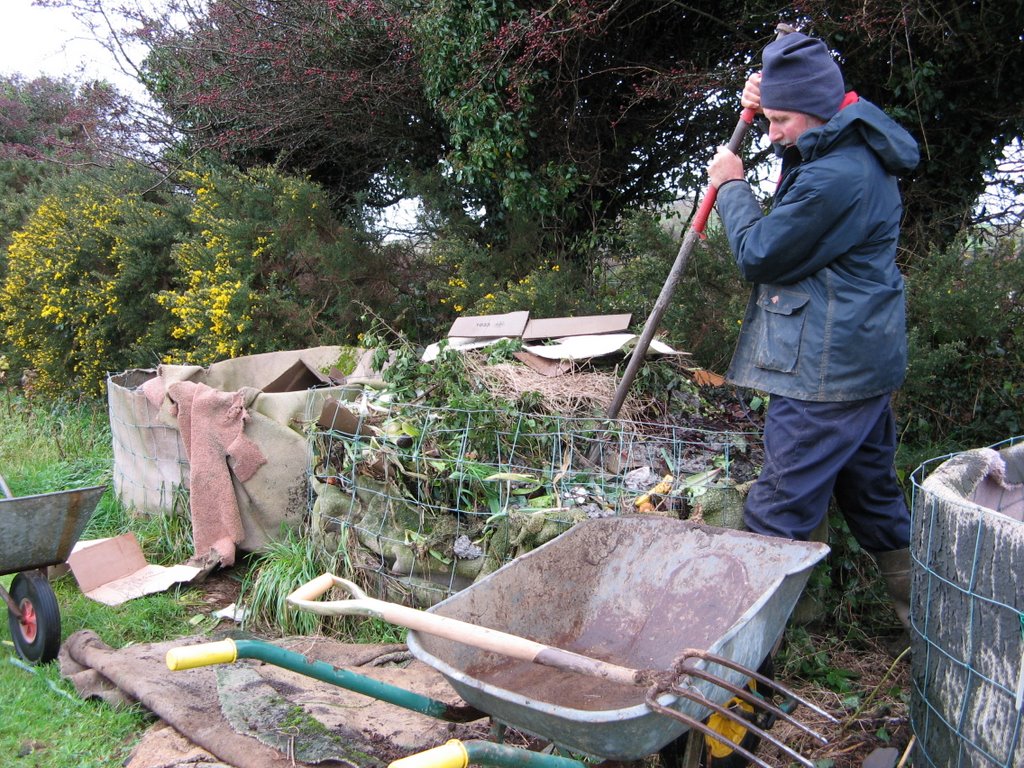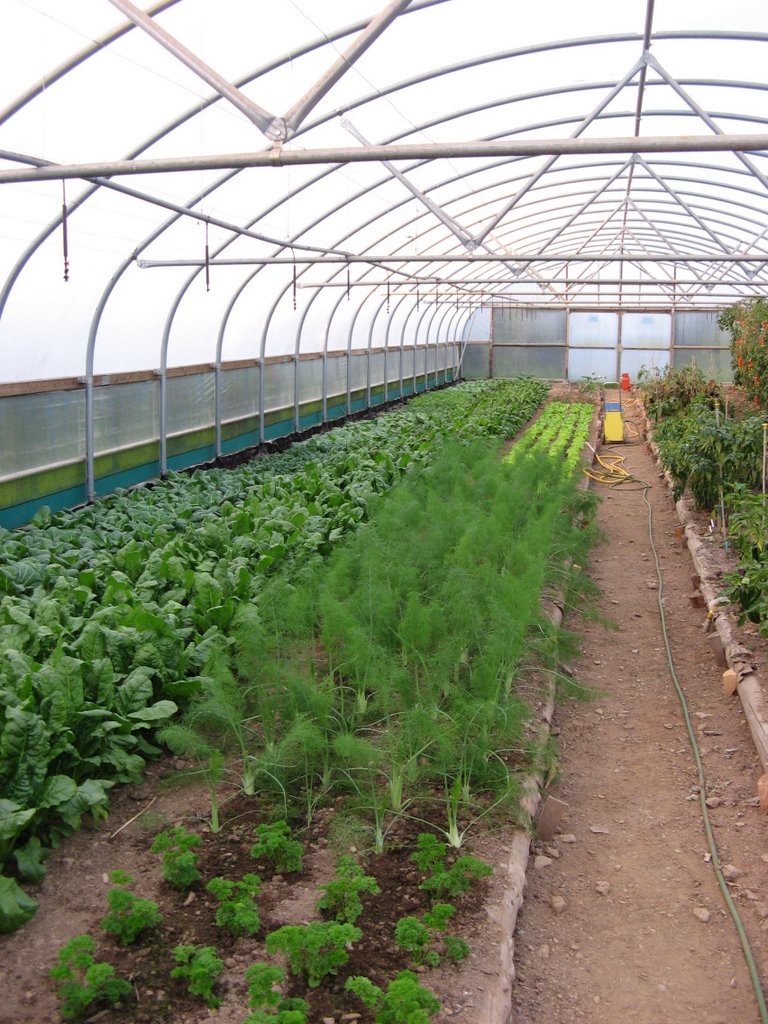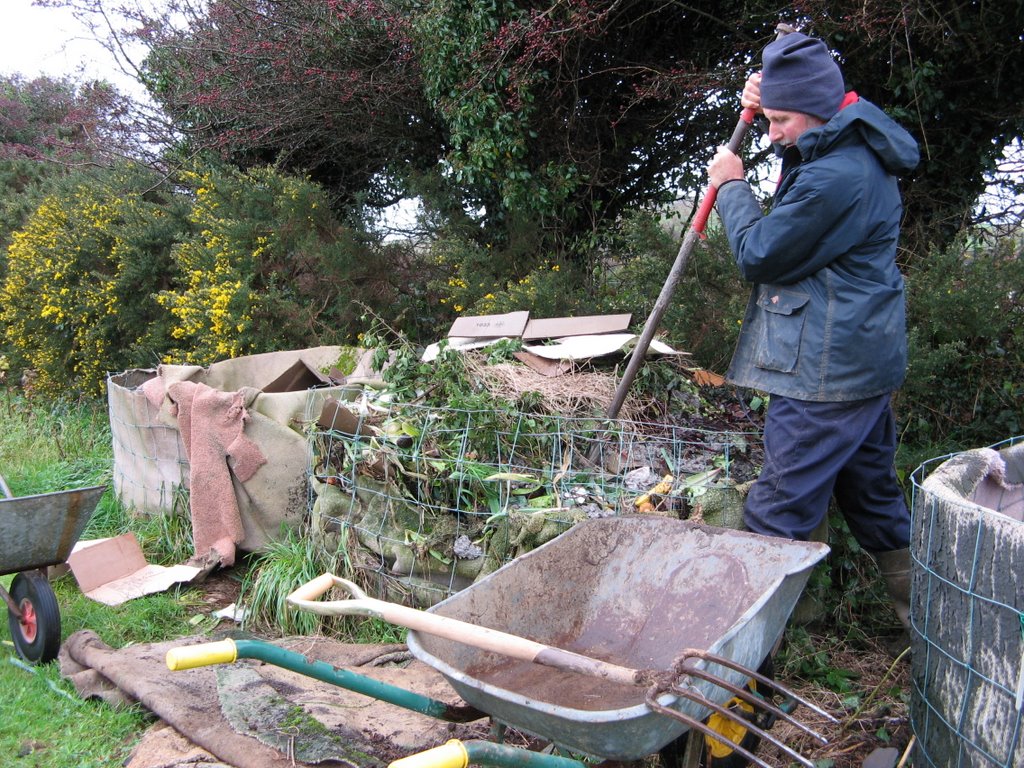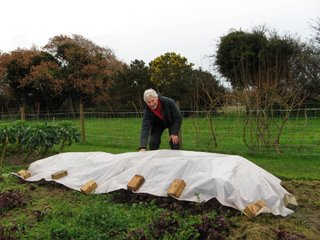
... is, of course, the compost heap. Our heaps - cylindrical because they're held in place by fencing net and old carpet - start off with almost everything biodegradable from the farm, including cardboard boxes. It's all about balancing the carbon:nitrogen content to achieve optimal effective decomposition. In fact, I don't bother too much with the details: much has been written on this topic. I just give the heaps plenty of time to decay. This one (first photo) I have dug out completely and dumped on next-year's brassica rotation beds, protected by a waterproof cover (leftover from the polytunnel construction 5 years ago) to prevent leaching by winter rains. It's excellent-looking stuff, well rotted and matured. I started the heap in March 2005 by which I mean I stopped adding stuff and covered it with carpet to start decomposing. You're supposed to turn the compost after a few weeks but, being lazy, I don't. Time seems to do the work for you.
Once the well-rotted stuff was out of its fencing net cylinder, I could close the latest heap. I first of all poke large holes all through the heap, top to bottom, using a heavy steel fencing bar. These holes will remain after the carpet covers are in place and allow oxygen to penetrate throughout the heap. Then I cover over the top with the old carpets (available from our local carpet shop, free of charge - they otherwise take them to the dump where they become non-recycled landfill) and lay old (also recycled, partly-rotted) fence posts on the top to stop the gales blowing off the cover. And that's it. One last thing is to write the date of closure on a plant label and attach it to the fencing net. That's how I know how old the compost is in each of the 5 heaps.
Oh yes, there are still weed seeds in the compost I make because I don't turn it as I should. So I find it easier to spread the compost in spring, rotavate it in and leave the seeds to germinate. Then I till it again a few weeks later, incorporating the sprouted weeds as green manure: yet another version of this lengthy exercise of recycling. What is really bothersome is that in any farming system, you are effectively 'mining' the soil. All the veg we sell to our customers is fertility lost to the system. Where does it all go? Down the sewers. Smelly waste? Well, umm, that's our fertility! There has to be a better way. Still, making compost helps redress the balance and, dear customers, if any of you cares to bring us compostable material which you don't want, I will gratefully add it to Mur Crusto's latest compost heap.
PS. Note to Val: Remember that nail brush you lost in early 2005? Well I found it... in the compost. Sorry, it wasn't recyclable. It was quite well rotted. I wonder if that lost pruning knife will turn up in the next lot of compost.


 ... is, of course, the compost heap. Our heaps - cylindrical because they're held in place by fencing net and old carpet - start off with almost everything biodegradable from the farm, including cardboard boxes. It's all about balancing the carbon:nitrogen content to achieve optimal effective decomposition. In fact, I don't bother too much with the details: much has been written on this topic. I just give the heaps plenty of time to decay. This one (first photo) I have dug out completely and dumped on next-year's brassica rotation beds, protected by a waterproof cover (leftover from the polytunnel construction 5 years ago) to prevent leaching by winter rains. It's excellent-looking stuff, well rotted and matured. I started the heap in March 2005 by which I mean I stopped adding stuff and covered it with carpet to start decomposing. You're supposed to turn the compost after a few weeks but, being lazy, I don't. Time seems to do the work for you.